The Japanese "HDSM" Serum Filipinos Over 35 Are Quietly Switching To
Three letters are showing up on the ingredient lists of Japan's most advanced serums — and most people have no idea what they mean. Here's what HDSM actually is, and why it changes what a serum can do.
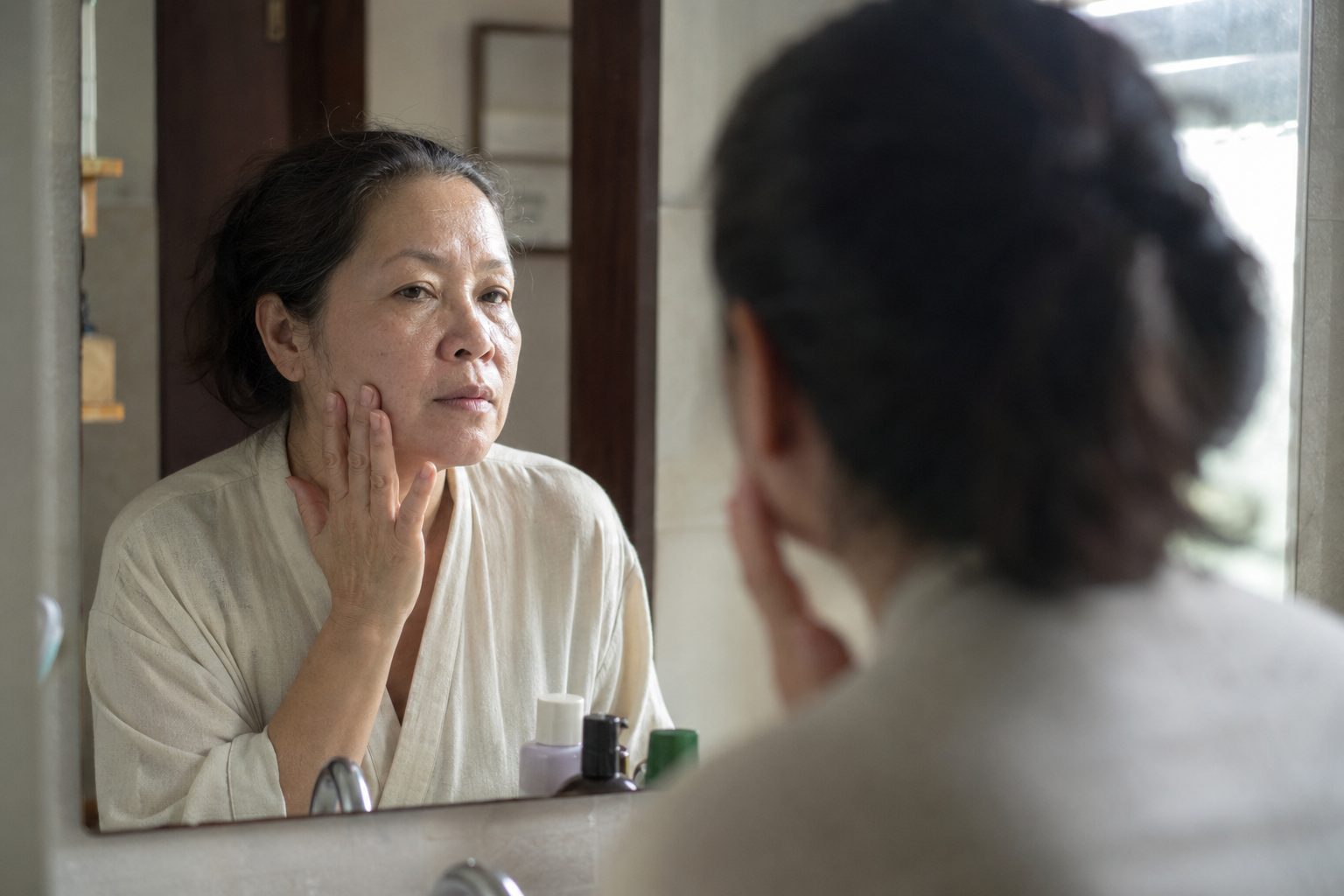
If you've walked into a premium skin clinic in Manila this past year, you've probably heard the pitch — the "cellular" facials, the growth-factor boosters, the exosome treatments that supposedly wake your skin back up. Firmer. Bouncier. That lit-from-within glow no cream quite delivers.
And here's the uncomfortable part: they work.
That's exactly the problem. A full course runs tens of thousands of pesos. And the moment you stop showing up for maintenance, the glow slowly fades — so you're back in the chair, card out, again.
You didn't waste your money. You hit a ceiling.
You've done everything right. The serums. The facials. The upgrades. And for a while it worked — then it stopped. Product after product now hydrates a little, brightens a little… but never touches the things that actually make skin read as older: the loss of bounce, the soft slackening around the eyes and jaw, the "I look tired even when I slept eight hours" quality.
This isn't a discipline problem. It's a ceiling. And it's the same ceiling that sends people to those ₱20,000 clinic packages. But there's now a third option — and it comes down to three letters almost nobody explains properly.
It was about restoring the signal.
What I noticed after years in Japan — and couldn't unsee
I spent years living in Japan. And somewhere in there, something started bothering me — in a good way.
I'd look at women in their fifties and sixties on the train, at the market, behind the counter at a shop. Not celebrities. Not people with money for clinics. Ordinary women — with calm, even, quietly luminous skin. Not "young" skin. Something better than that: skin that looked well. Rested. Like it was still doing its job.
Back home, I was watching friends the same age fight a losing battle — stronger actives, harsher peels, more expensive facials, more frustration. Doing more, and getting less.
So I started asking. And the answer surprised me, because it wasn't a product.
The Japanese ask, "what does my skin actually need?"
What I found was a whole philosophy — and it runs almost opposite to how most of us were taught to treat our skin:
They support the skin instead of attacking it. Western-style routines tend to strip, resurface, and force change — acids, aggressive exfoliation, "purging." Japanese skincare works with the skin's own processes, protecting the barrier rather than repeatedly breaking it down.
They protect obsessively. Sun protection isn't a summer product — it's a daily habit from a young age. Decades of that quietly prevents a huge share of what we call "aging."
They value consistency over intensity. A gentle ritual done twice a day for twenty years beats an aggressive treatment done in a panic at forty-five. Skin rewards patience, not force.
And they invest in the science early — not late. Japan has been researching cellular skincare for decades. The mindset isn't "repair the damage." It's "keep the skin communicating well, so damage never accumulates in the first place."
That last one is what stopped me. Because it reframed the whole problem. The women I admired weren't reversing anything. Their skin had simply never stopped receiving the signals that keep it renewing — and their routine protected that.
That's when it clicked: the goal was never a stronger product. The goal was to restore the signal. And that question — how do you give mature skin its signal back? — is what sent me looking for the science that became BIOCELL.

The three letters behind Japan's cellular skincare
When human stem cells are cultured in a sterile Japanese lab, they release a rich fluid of signaling molecules — growth factors, peptides, and messengers that coordinate skin renewal. That fluid is HDSM. It contains no live stem cells at all — only the powerful signals they produce. Think honey, not the bee.
This matters because of what it replaces. Most serums hand your skin raw materials — hydration, antioxidants, exfoliants — and hope for the best. HDSM hands your skin instructions. It's the difference between dropping bricks at a construction site and sending the crew a blueprint.
And here's the part worth understanding: HDSM is a step beyond ordinary "conditioned media." Many serums riding this trend use a thin, generic culture fluid with only a trace of real signaling activity — enough for a label claim, not enough for your face. Properly produced HDSM is the concentrated, full-spectrum version: the complete message, not a diluted echo of it.
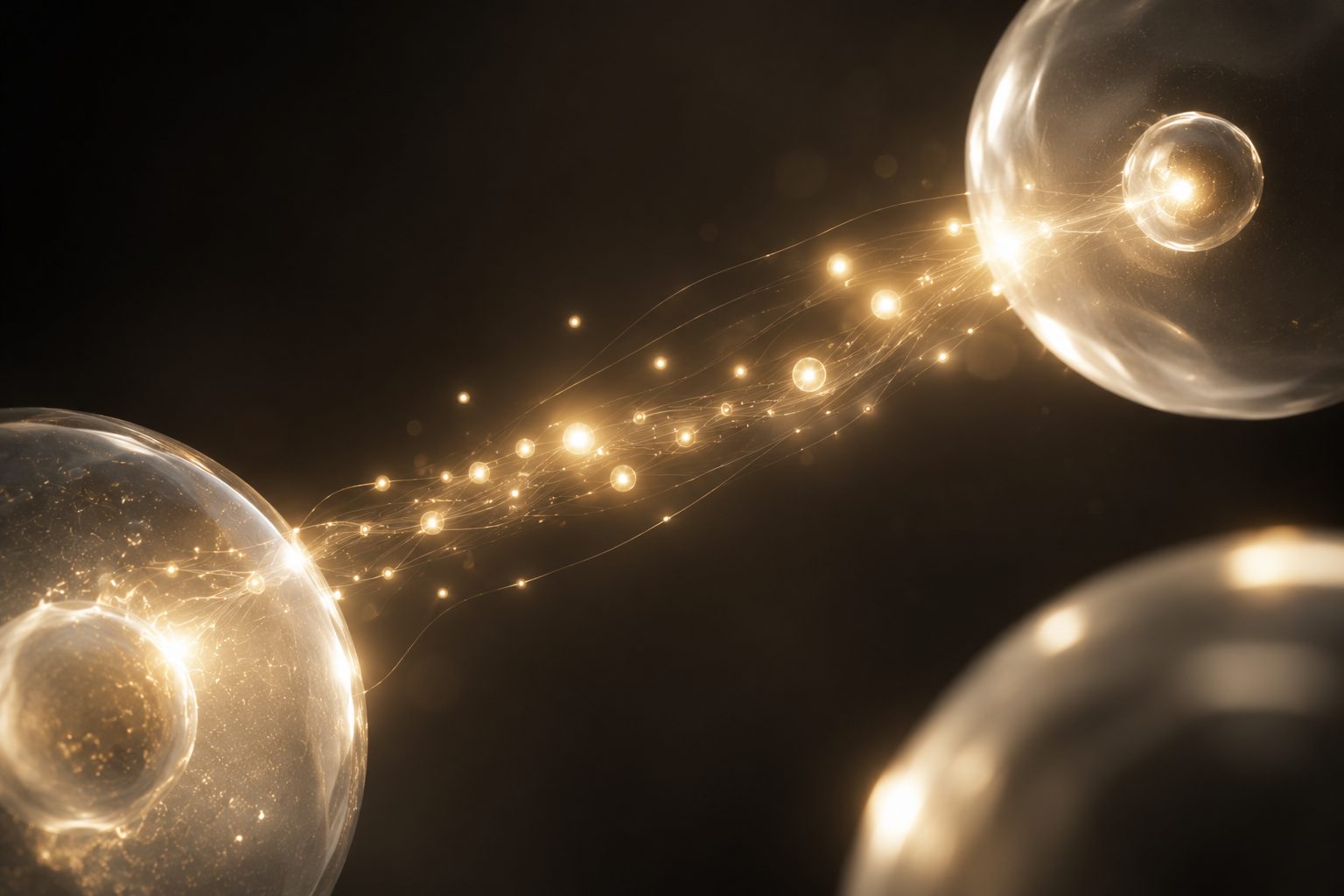
A messenger with nothing to deliver is just an empty envelope
Here's what separates the real thing from the hype. A renewal signal has two parts: the message — the actual instructions telling skin to rebuild — and the messenger — what carries that message deep enough to matter.
Most serums riding the exosome trend give you the messenger with little meaningful message inside. Empty envelopes. Others give you actives (a message) that die on the surface because nothing carries them deep enough. Either way, you're getting half. That's why they underwhelm.
HDSM
Human Derived Stem Cell Media — the concentrated growth factors & peptides that instruct skin to renew.
Exosomes
Nano-carriers that deliver that message where surface actives can't reach.
Introducing BIOCELL™ Perfect Serum
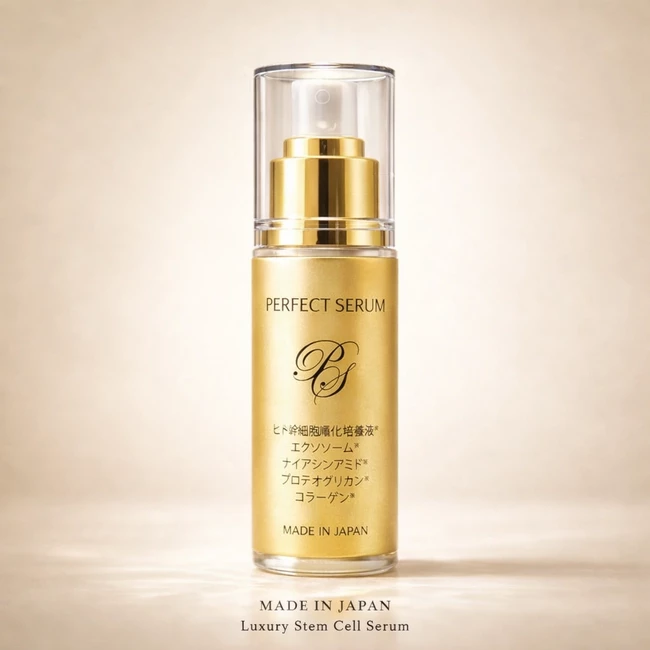
Perfect Serum is a dual-signal regenerative serum built to bring that renewal science home — without the needle. At its core: HDSM (the full message) and Exosomes (the messenger), paired the way the science actually calls for — then finished with a supporting cast worthy of a Japanese clinical-skincare brand.
- Niacinamide — helps even the look of tone & support the barrier
- CICA (Centella Asiatica) — helps calm & soothe
- Hyaluronic Acid + Peptides — deep, layered hydration & bounce
- Apple Fruit Cell Extract — antioxidant support for a fresh, radiant look
- Mt. Fuji Natural Water — an ultra-pure base for absorption
Why a 40-year Japanese brand put its name on this
A new serum is easy to be skeptical of — so it's worth knowing who's behind this one. BIOCELL is a Japanese skincare brand with over 40 years in clinical and aesthetic formulation, based near the foot of Mt. Fuji. When cellular skincare crossed from clinic to topical, most brands rushed the cheapest version to market. BIOCELL did the opposite:
- True HDSM and exosomes — not a token trace for the label
- The two paired the way the science actually calls for
- Stabilized and finished to a Japanese clinical-skincare standard
- Released in small, controlled batches to protect formulation integrity
A facial therapist at SM Fairview's Dermatology Center for Asia asked customer Ivy this — without knowing what she was using. She'd been applying BIOCELL™ Perfect Serum daily for several weeks. The therapist guessed "stem cell" from the quality of her skin alone.
It's just been waiting for the signal — the full one.
Ready to bring the clinic ingredient home?
A limited launch batch of BIOCELL Perfect Serum is available now — Cash on Delivery, nationwide across the Philippines, with a Buy 3, Get 3 FREE Gifts offer on this release (₱6,917 in free gifts). Check current availability on the next page.
Check Availability in PH →Cash on Delivery · Pay only when it arrives